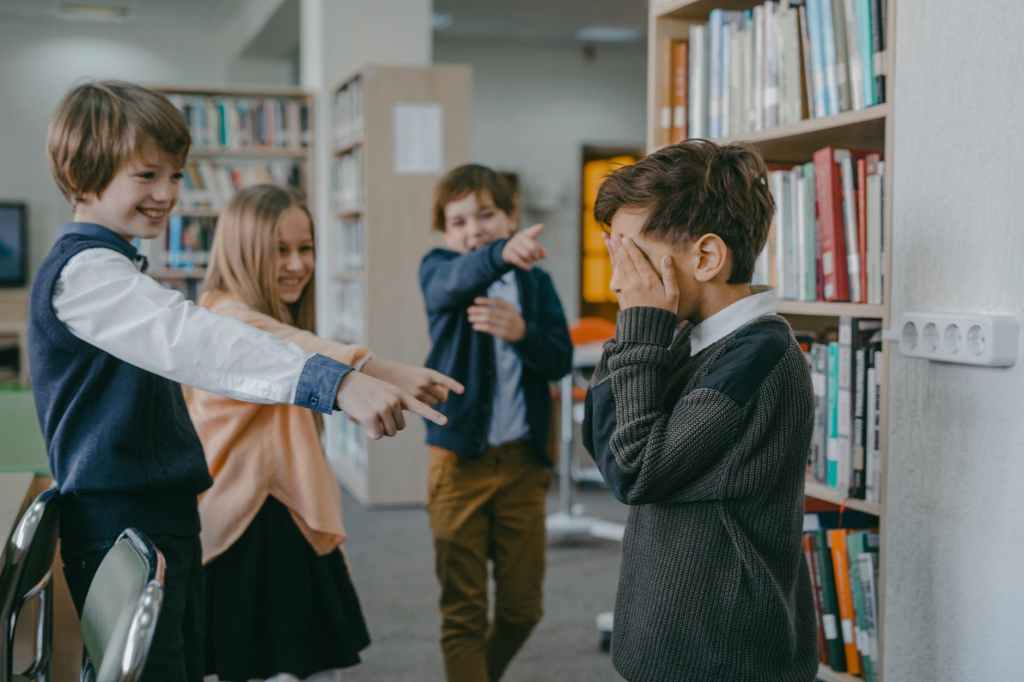
According to statistics by the pacer’s National Bullying Prevention Center via National Center for Education Statistics 2019, out of every five students, one suffers bullying. And 41% of students say they fear it will happen again.
As a parent, I’m always hopeful that my kid meets lovely people when he starts school. And as he moves from preschool to Nursery, I’m even more concerned that he doesn’t experience bullying.
But this is merely wishful thinking. I still need to teach him ways to avoid being bullied.
Many parents can relate with me on this.
If so, what’s the best way to help your child deal with bullying and also prevent them from being bullied?
This article takes a deep look at bullying and why it happens in the first place.
What Bullying Is
Bullying is intentionally causing harm to another either physically or psychologically.
Bullying can take the form of name-calling, threats, intimidation, inflicting physical injury on others, spreading rumours about others or preventing them from taking part in school social activities.
This has become a common trend in schools today. And it happens at all levels of schooling.
From Nursery school, kids can start to pick on other kids, deprive them of sharing in school play areas and toys and also physically hurt them. By pushing, scratching them or knocking down their things.
Bullying can get as far as involving serious threats to the safety of your child. That’s why as a parent, teacher or school authority you must be alert and be observant of your kids or students.
Know when they seem distressed and scared. And find out why. Every child has a right to be free and safe in school. There’s no good enough excuse for taunting other kids.
And I’m not talking about scenarios where kids are just playing and laughing over silly things. This is normal. However, there’s always a red line.
And kids and teenagers must be taught to know the borderline.
Why Children Become Bullies
Some children enjoy being bullies because of the power they feel it gives them over others. They enjoy control over their peers and just want to have victims.
Others are bullies because they want attention. They want to become popular and feared in school.
Meanwhile, some have been victims before. They are from aggressive homes and have been deprived countless times.
How Can You Tell Your Child Is Being Bullied?
Oftentimes victims of bullying are too scared to report the incident.
They are afraid that the bully may find out they reported and that could make matters worse for them. Or, maybe the adult they report to will see them as weak.
But that shouldn’t be. Adults must be alert around kids.
Don’t say, “It’s difficult to know because my child isn’t telling me”.
While the evidence of bullying may not be black and white – except in cases where there are physical injuries – you know your child; their behaviour, how they socialize.
Something will change in them.
According to expert counsellors, visible bruises will make it easier to pinpoint.
Still, without injuries, there are signs to help you know what’s happening with your child. Some of the red flags are your child doing the following:
- Behaving anxious or scared
- Displaying withdrawal signs and not wanting to socialize
- Not sleeping or eating properly
- Not willing to talk about their day in school
- Not wanting to go to school (or anywhere where the bullying is happening) and giving excuses when the need arises.
Effects Of Bullying On Kids And Youths
Bullying leaves negative effects on kids.
Both the victims and bullies can suffer lasting effects in the cases of chronic bullying.
In 2004, when the US secret service carried out a study, it revealed that about three-quarters of school shooters have faced bullying and harassment in the past.
Victims of bullying can become:

- Withdrawn and avoid social circles
- Develop a fear for school and desire to quit
- Lose their self-esteem
- Develop lasting emotional scars
- Become sick or depressed.
The bullies can go on in future to become:
- Troubled and abusive adults
- Violent adults
- Involved in drugs and crime and maybe go to jail
- Display anti-social behaviours.
Preventing Bullying
Victims of bullying may not want to speak up but if your child or student does, it’s your responsibility to teach them how to fight it and overcome it. Don’t just assume it’s normal and will go away with time.
Never tell a child who reports bullying to you, “oh don’t worry you will get over it soon or your classmate will soon get tired and leave you alone”.
Thousand times no! Take it seriously and find a lasting solution.
What Solution Is There?
- First off, develop your child’s emotional strength. Teach them to look into a person’s eyes while talking to them. Teach them body language that shows bravery. A bully can’t stand that. They won’t pick on someone they perceive as bold.
- Always be a good listener if your/a child speaks up and confides in you. Tell them you trust and believe them. And offer comforting words immediately.
Speak to your child’s or student’s emotion and tell them you believe in their strength and ability to defend themself.
- Explain and practise with them how to be bold and to face one’s fear when it shows up again. Make play scenarios where you show them to be strong, bold and firm.
Teach them to tell the bully to “BACK OFF this time/ STOP picking on me because I don’t find it funny” then walk away.
- Teach kids not to show anger, fear or cry but rather practice how to calm down and walk away or focus on something else. What the bully wants is to see them show signs of weakness.
- Kids who are bullied shouldn’t be alone, especially in troubled spots like the bathroom, school bus, locker room, or hallways. They should always pair up with a buddy.
According to a 2017 report by the US National Center for Education Statistics (NCES), about 20% of students reported that they faced bullying. With a whopping 42% taking place in the hallways, 10% in the bath/locker room and school bus respectively.
What Is A School’s Role?
Because about 90% of bullying happens in school, it’s expected that schools will set rules that discourage bullying. School authorities should educate students on the consequences of bullying and the legal actions involved.
The very simple steps you can take as a school head and teacher is to:
- Teach good morals like empathy and kindness
- Teach self-esteem development as part of the extra-curricular class
- Encourage other kids to speak up if they notice or witness bullying
- Put adequate supervision in places where bullying happens a lot
- Always pair and change children in teams and utilize group work regularly. This will help promote team spirit and friendship.
As a teacher, you should make your classroom a community of learners. Where everyone must care for the other and work together.
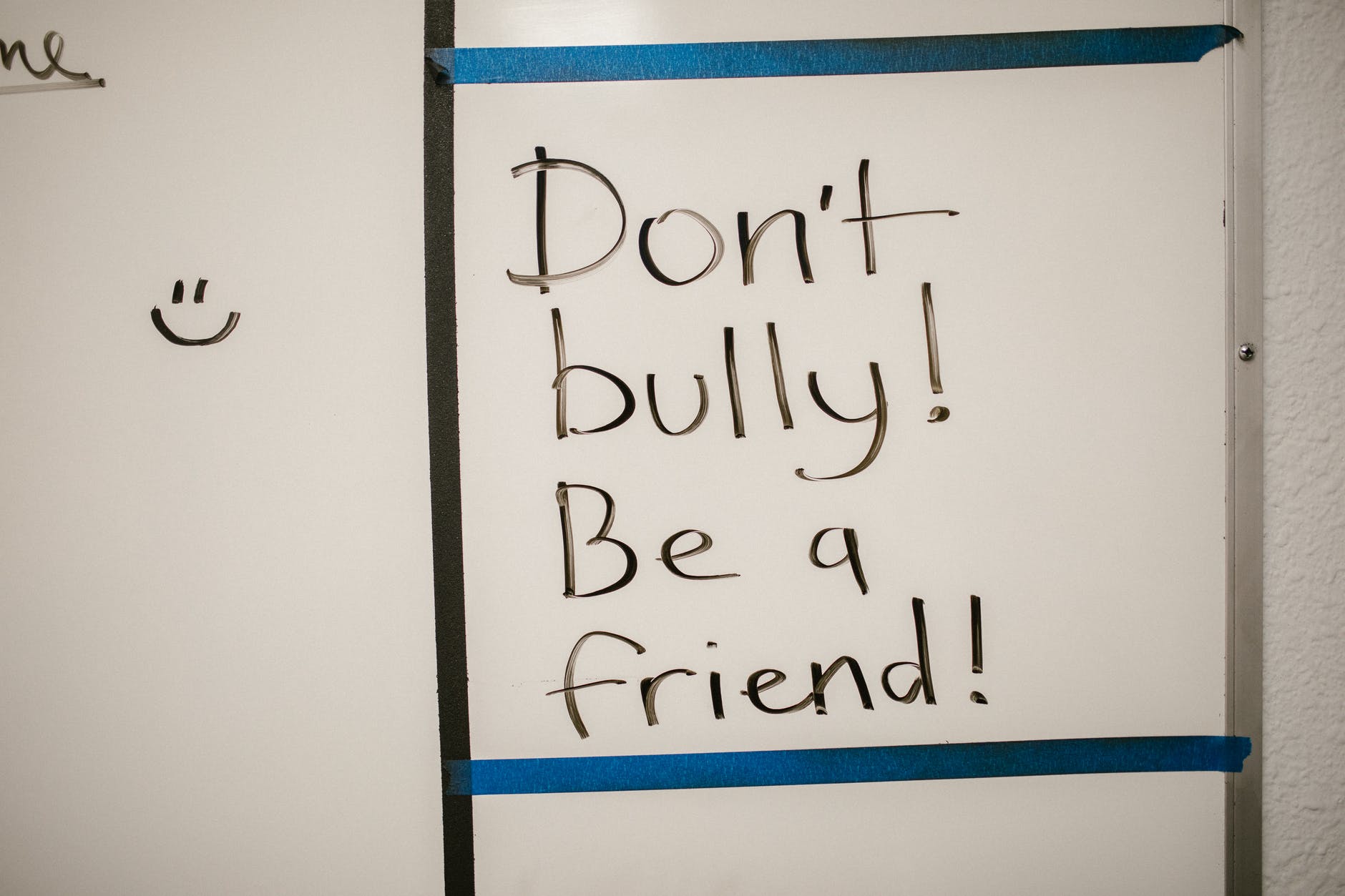
Make your class as safe as possible. Keep your eyes and ears open and act quickly should you notice or suspect anything.
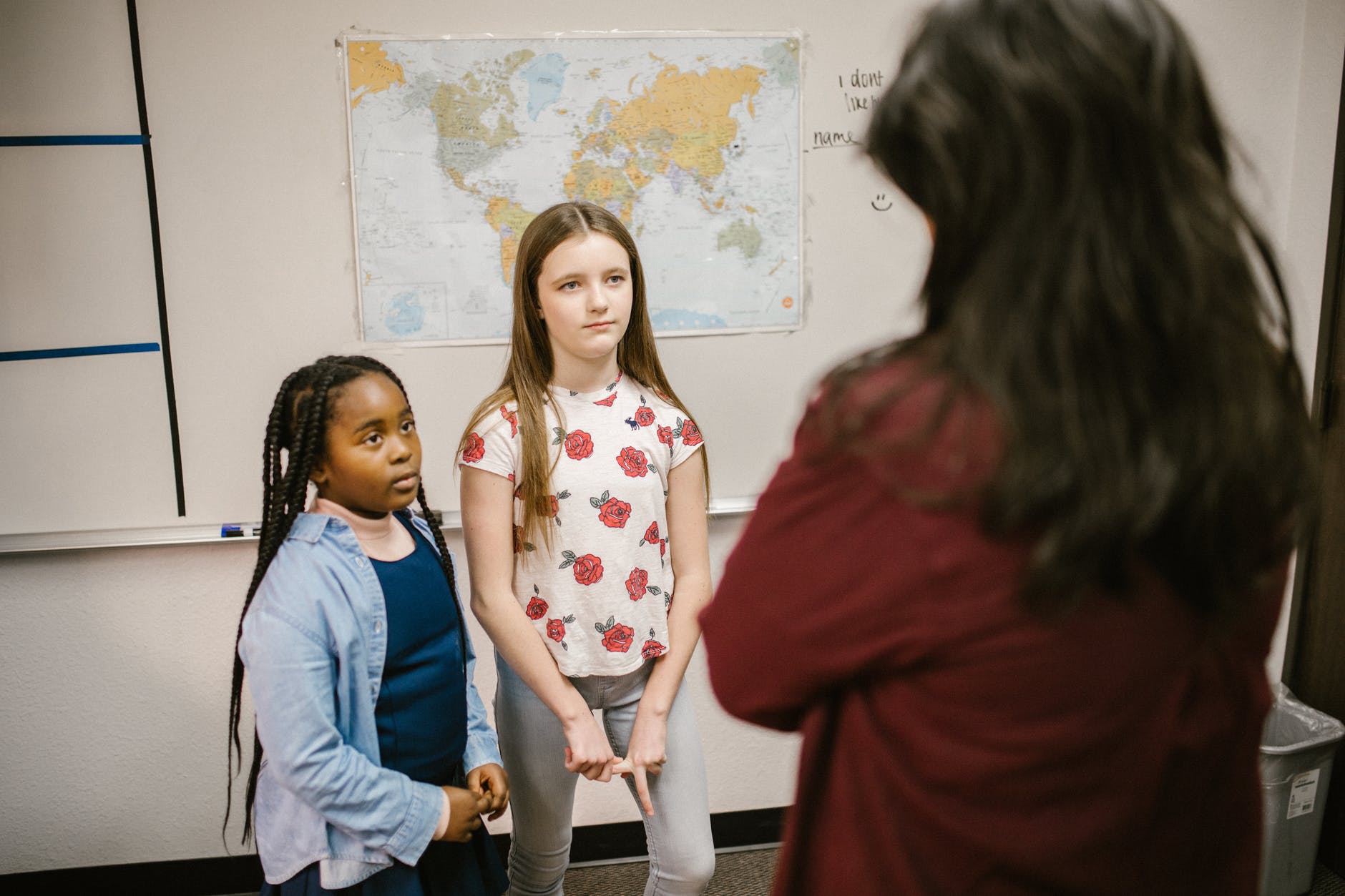
Many governments and districts have adopted policies against bullying. You should implement them for safety purposes. And provide in your school counsellors who can help victims and bullies alike.
When Your Child Is The Bully
Imagine a report comes from your child’s school accusing them of being involved in acts of bullying.
How will you react?
Brush it off? Or get angry. Pick a fight with the school and say “it’s not possible, my child can’t do that”?
Rather, you should investigate. Go speak calmly with the school.
You’re a parent who knows your child very well right? You know what they can and can’t do.
And if you find that it’s true, talk with your child. Find out from them why they are involved in such an act. Spend time to bond with them.
Avoid aggressive display of attitude at home. Just ensure you’re an example you want them to model.
Get help from a counsellor. Speak with your child and caution them. Learn the policies against bullying and use them to caution your child.
Be firm with your child and set rules to discourage them from such behaviours.
Conclusion
Bullying can occur because of a person’s race, social status, sexual preference (LGBTQ).
This is dangerous.
Bullying can cause serious injury and hurt children and young people emotionally.
In serious instances bullying has caused fatal school shootings.
The 2004 report that was released by the Secret Service found during their studies that some teenagers who were involved in school shootings were at one point badly bullied.
The study also discovered that some were taunted, called homophobic names, and were told things that made them uneasy.
For this reason, you must teach your child to be emotionally strong, because tyrants pick on those who can’t defend themselves; those that appear easily intimidated.
The school exists to offer a safe learning environment for kids.
Therefore, you should work with parents and counsellors to stop bullying.
I encourage parents to take legal action if it doesn’t stop.
Because in the end, your child’s safety and welfare is the only thing that matters.
 Education101today